
Latest News
Enhanced Tracking of Manuscript Status Now Available
Want to check on the status of your submitted manuscript? Now it’s easier than ever!
AAS Journals Welcome New Scientific Editors
We’re pleased to announce the appointment of Dr. Kat Volk and Dr. Jennifer Hanley as scientific editors for the Planetary Science Journal (PSJ). Volk, a senior scientist at the Planetary Science Institute, brings expertise in small bodies within our solar system, such as comets, trans-Neptunian objects, and the distant, icy…
Assigning DOIs to data published in the journals
Starting in 2025, we are further enhancing the digital data published in the AAS Journals by giving each contributed dataset or online-only figure a unique digital object identifier (DOI). Improving data publication in the journals For over twenty-five years, authors have provided digital data with their AAS journal publications.…
Author Resources



AAS Nova Research Highlights
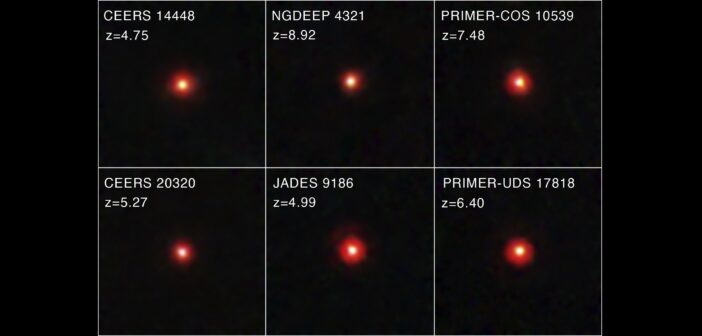
Seeing Red: New Constraints on Origin of JWST’s Little Red Dots
Supercritical accretion of black holes may drive the formation of enigmatic "little red dots."
The post Seeing Red: New Constraints on Origin of JWST’s Little Red Dots appeared first on AAS Nova.
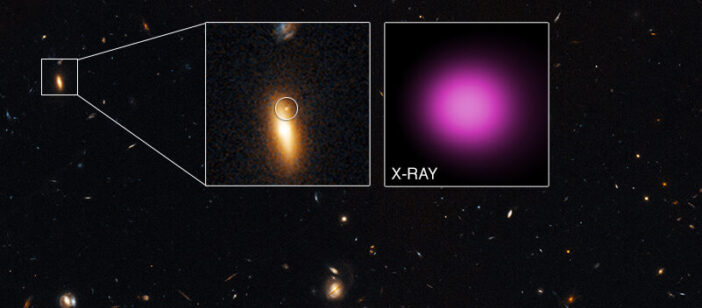
Anybody Home? Black Hole Occupation Fraction Helps Clarify Galactic History
Most galaxies are expected to contain at least one massive black hole, but how robust is this prediction? New research uses simulations to look at which galaxies tend to have more or fewer black holes, and with what properties.
The post Anybody Home? Black Hole Occupation Fraction Helps Clarify Galactic History appeared first on AAS Nova.
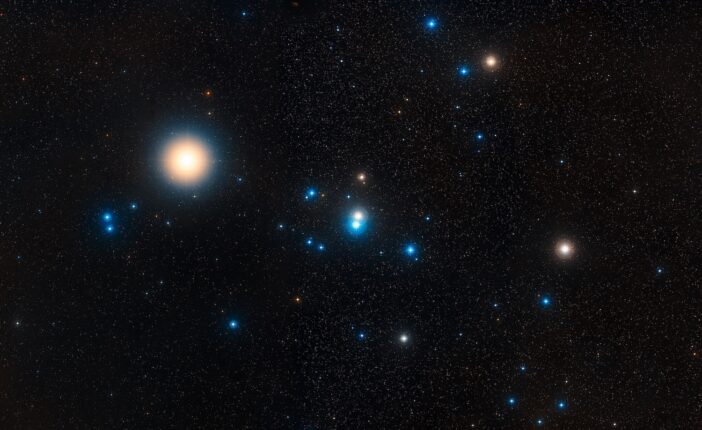
It’s a Beautiful Day in the (Solar) Neighborhood
Get to know your neighbors with a new database of nearby star clusters, stellar associations, and substellar objects.
The post It’s a Beautiful Day in the (Solar) Neighborhood appeared first on AAS Nova.
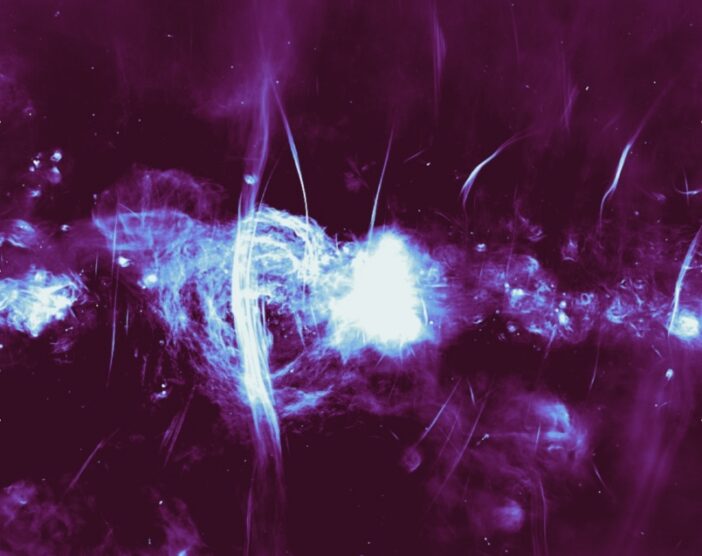
Featured Image: Examining Galactic Filaments
The center of our galaxy is known to host hundreds of radio-emitting filaments, but the energy source for these features remains a mystery. New simulations attempt to shed light on what powers galactic non-thermal filaments.
The post Featured Image: Examining Galactic Filaments appeared first on AAS Nova.
AAS Journals Editorial Board
The AAS Editor in Chief, the ApJ Letters Editor, the PSJ Editor, and a team of seven Lead Editors and more than 30 Science Editors manage peer review of its flagship research journals.
AAS Publications Committee
The AAS Publications Committee works with the AAS Editor in Chief to oversee the policies, editorial personnel, and new initiatives of AAS publishing.